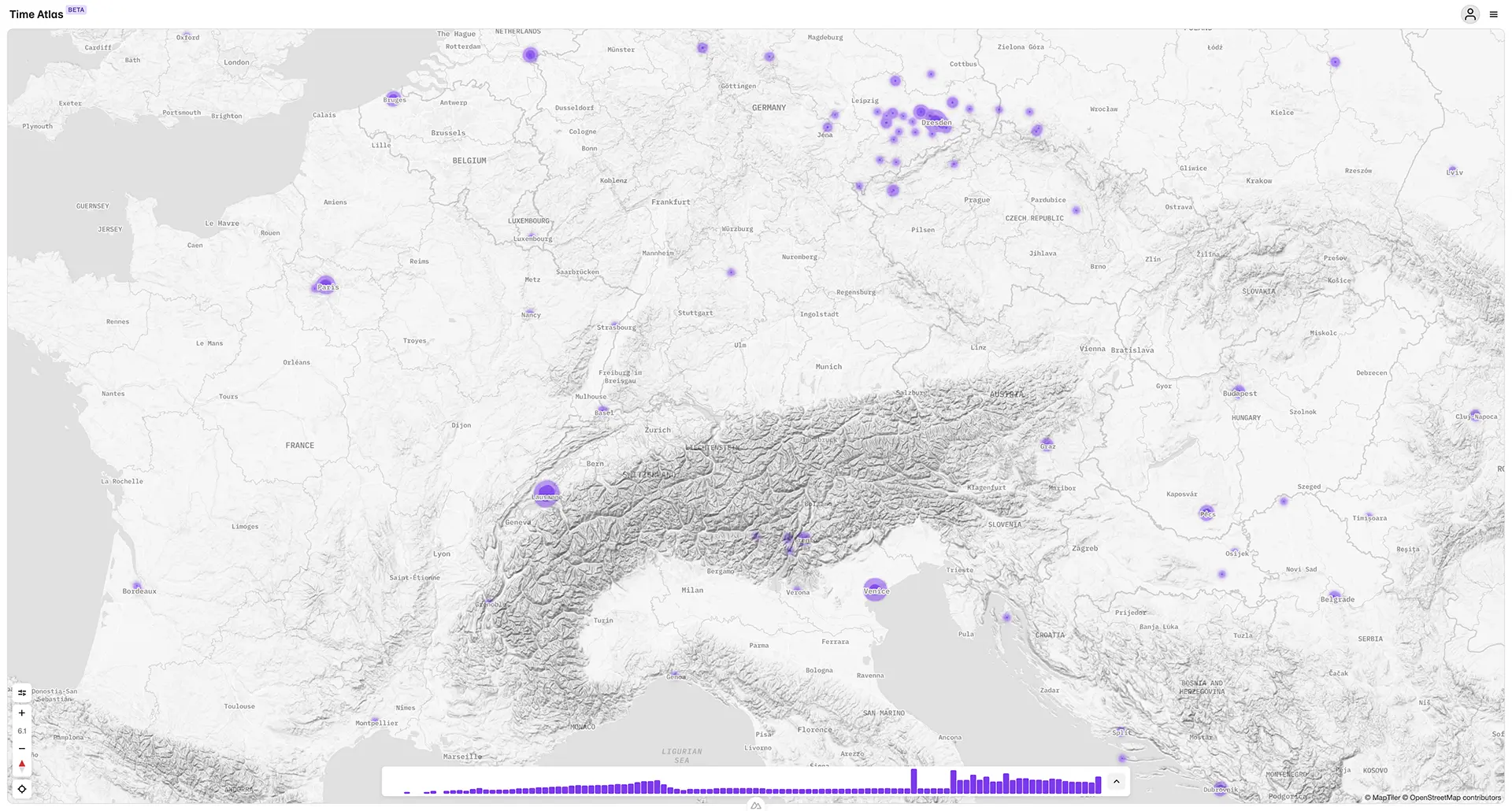
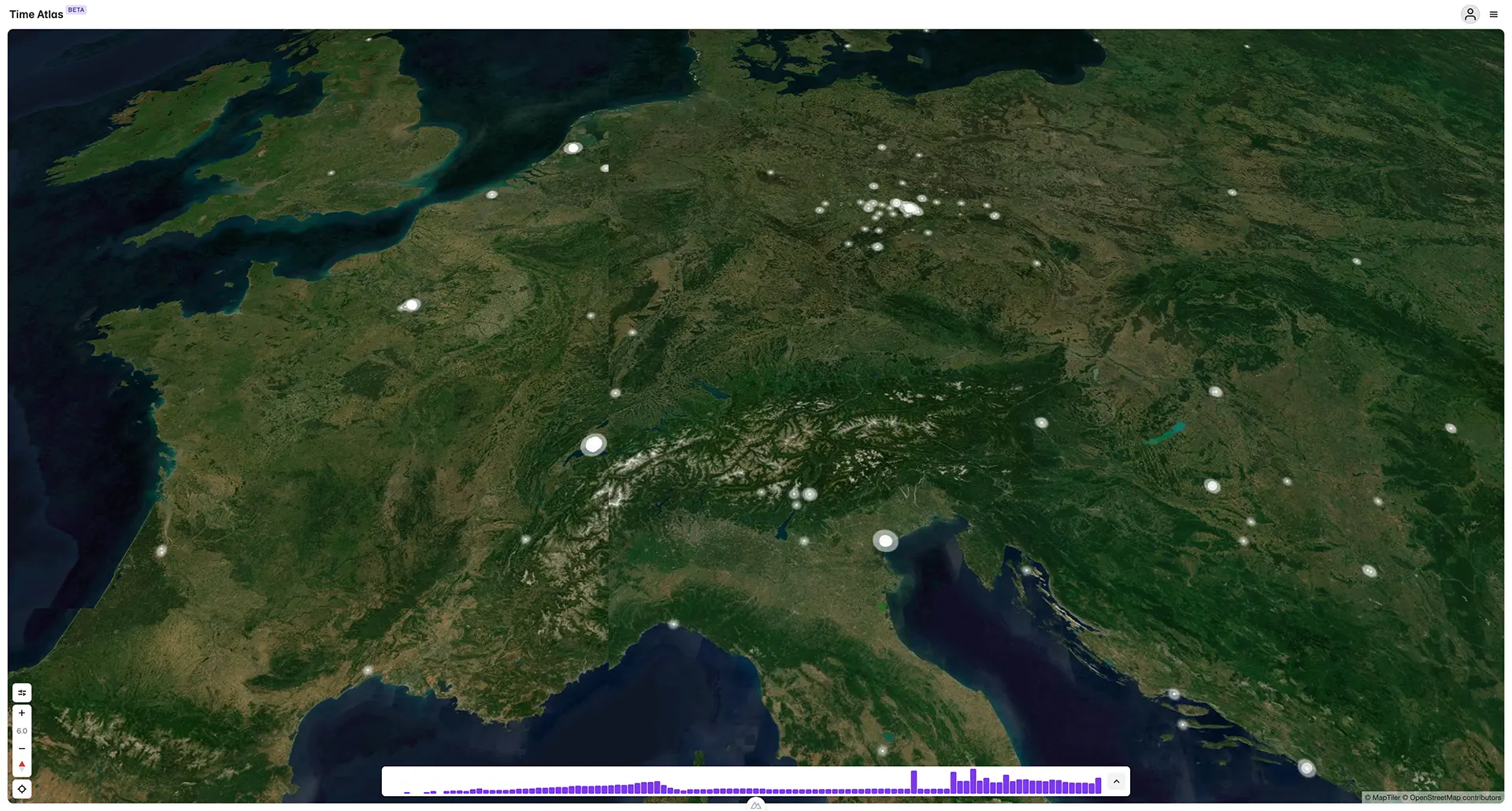
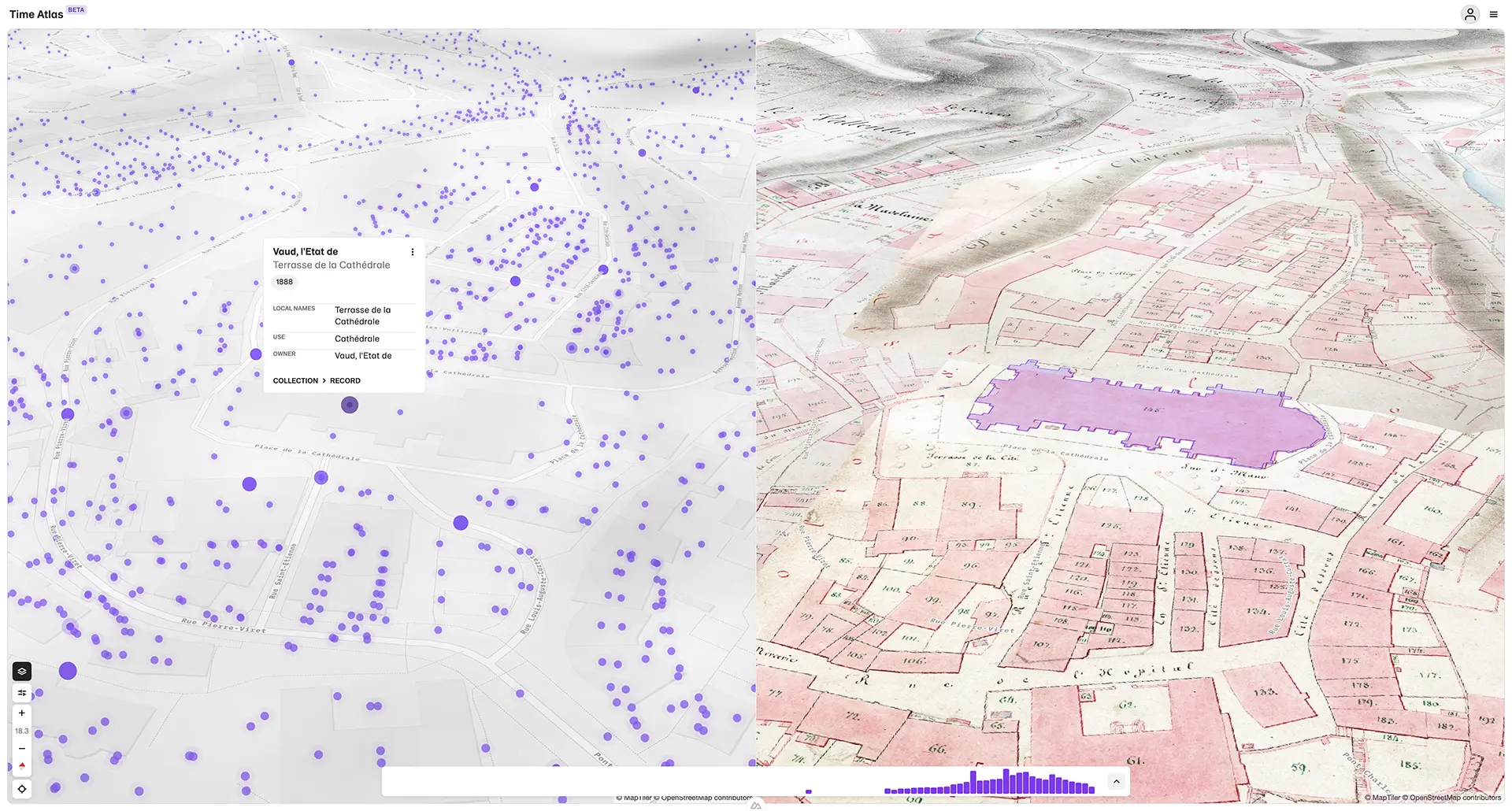
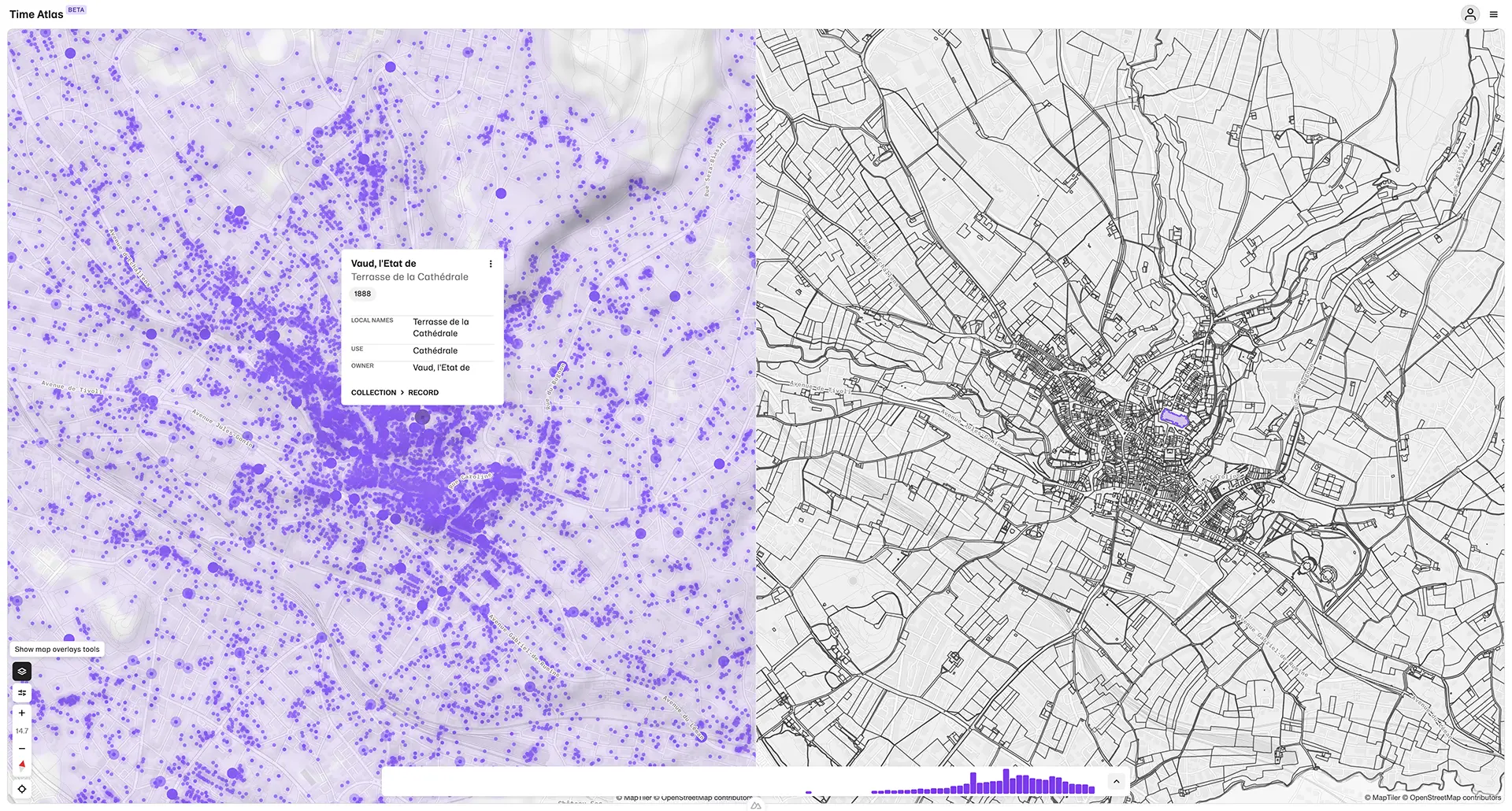
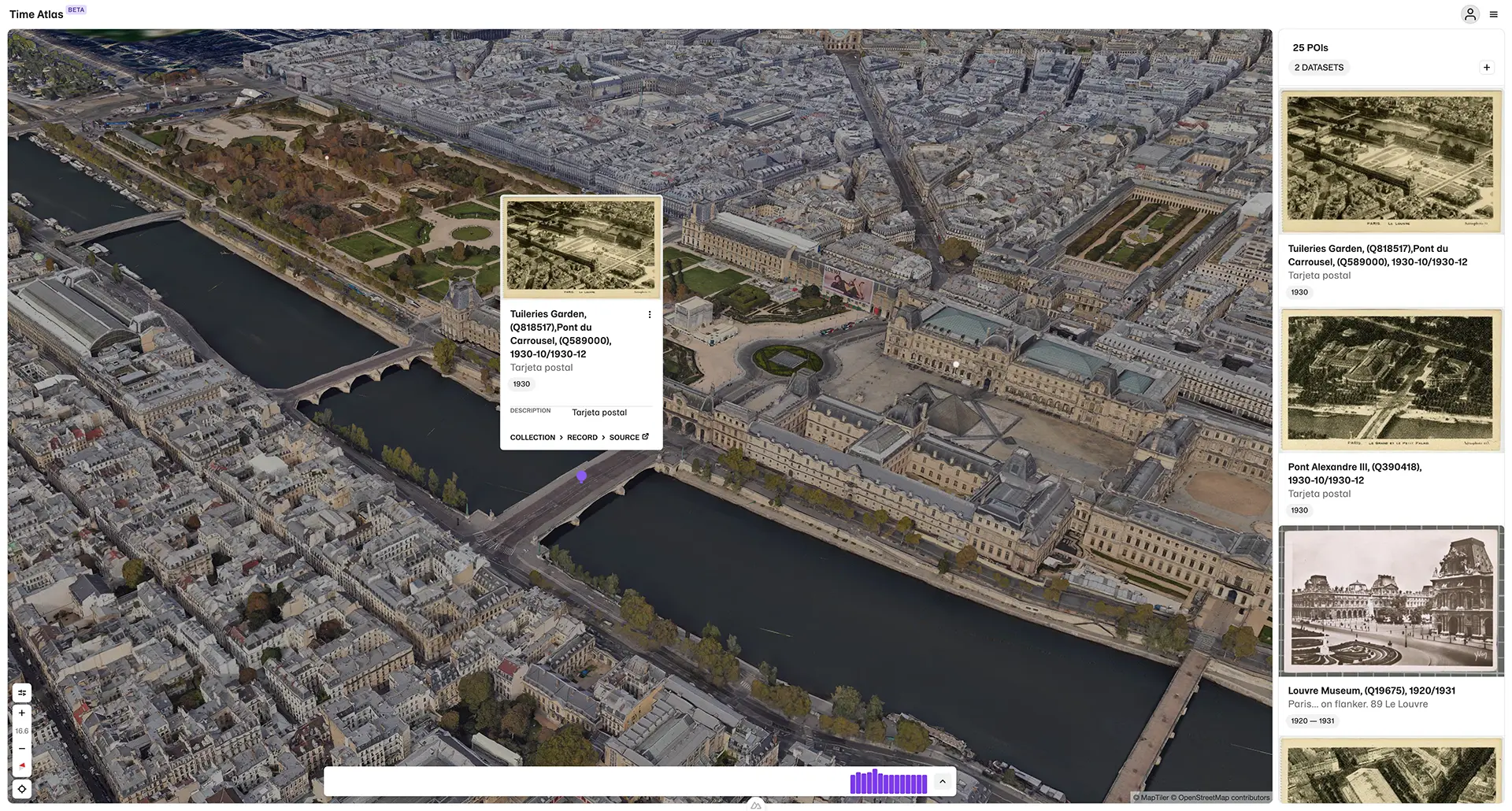
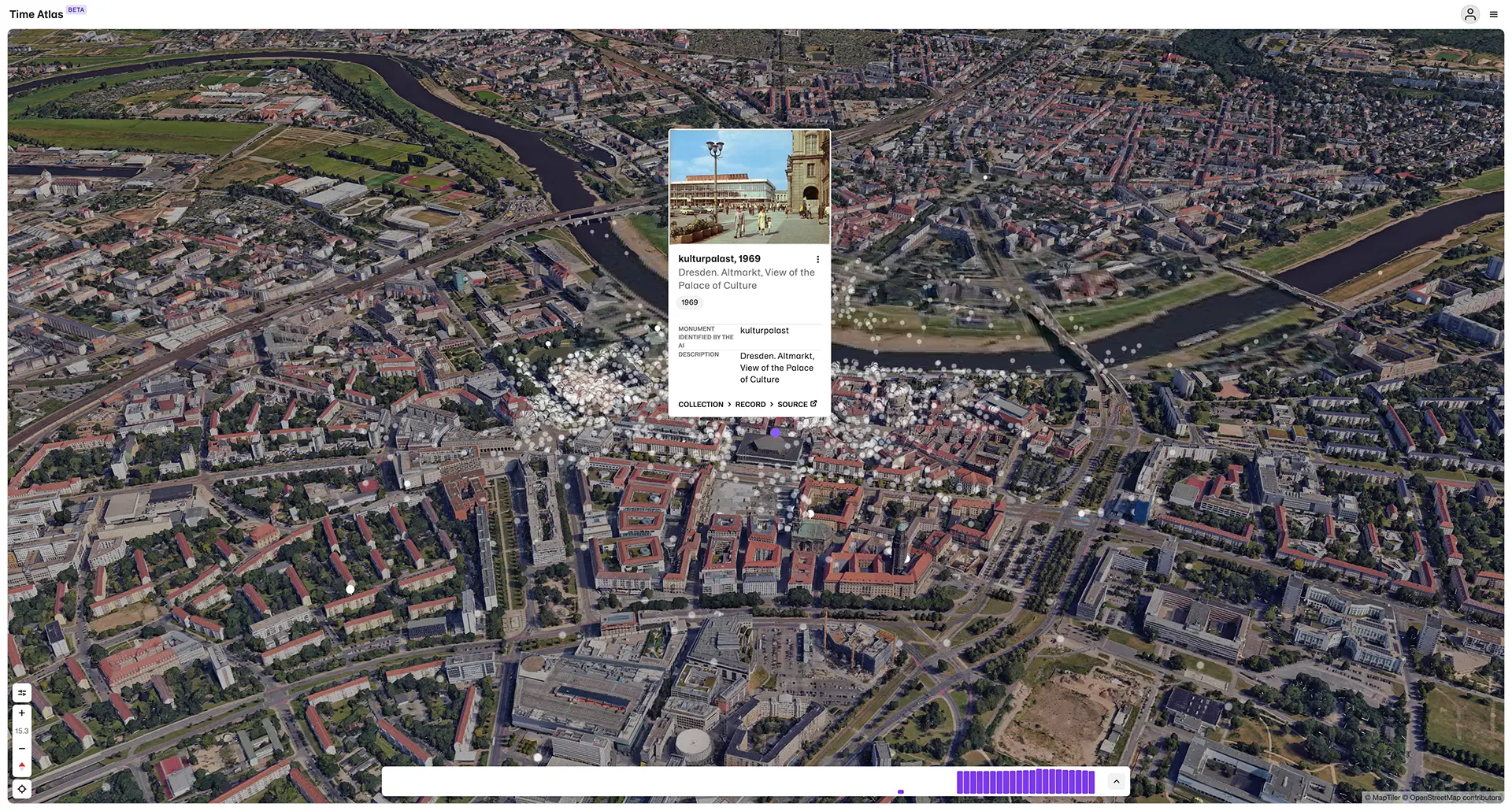
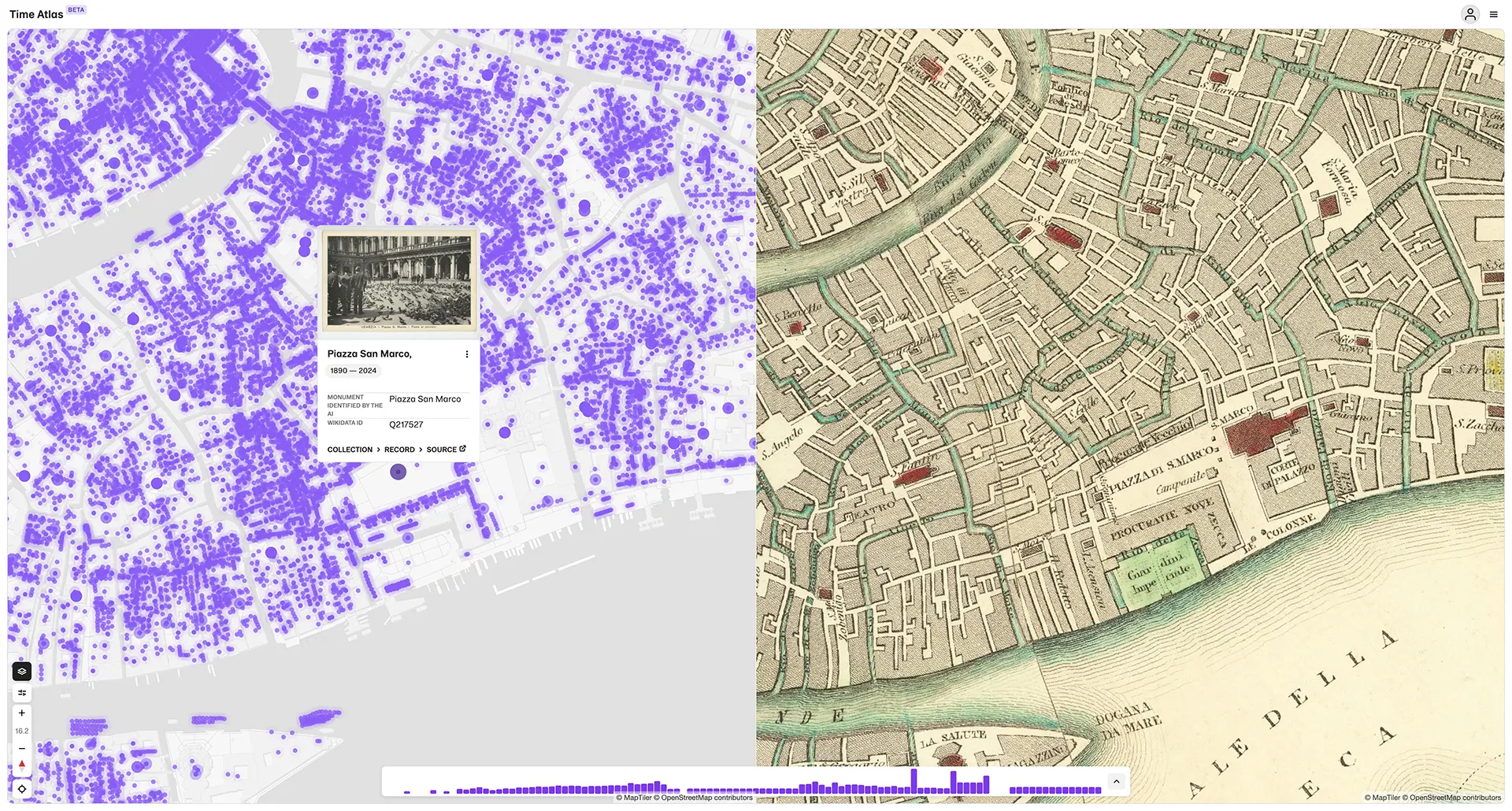
The Time Atlas makes it possible to navigate through time as easily as one navigates through space.
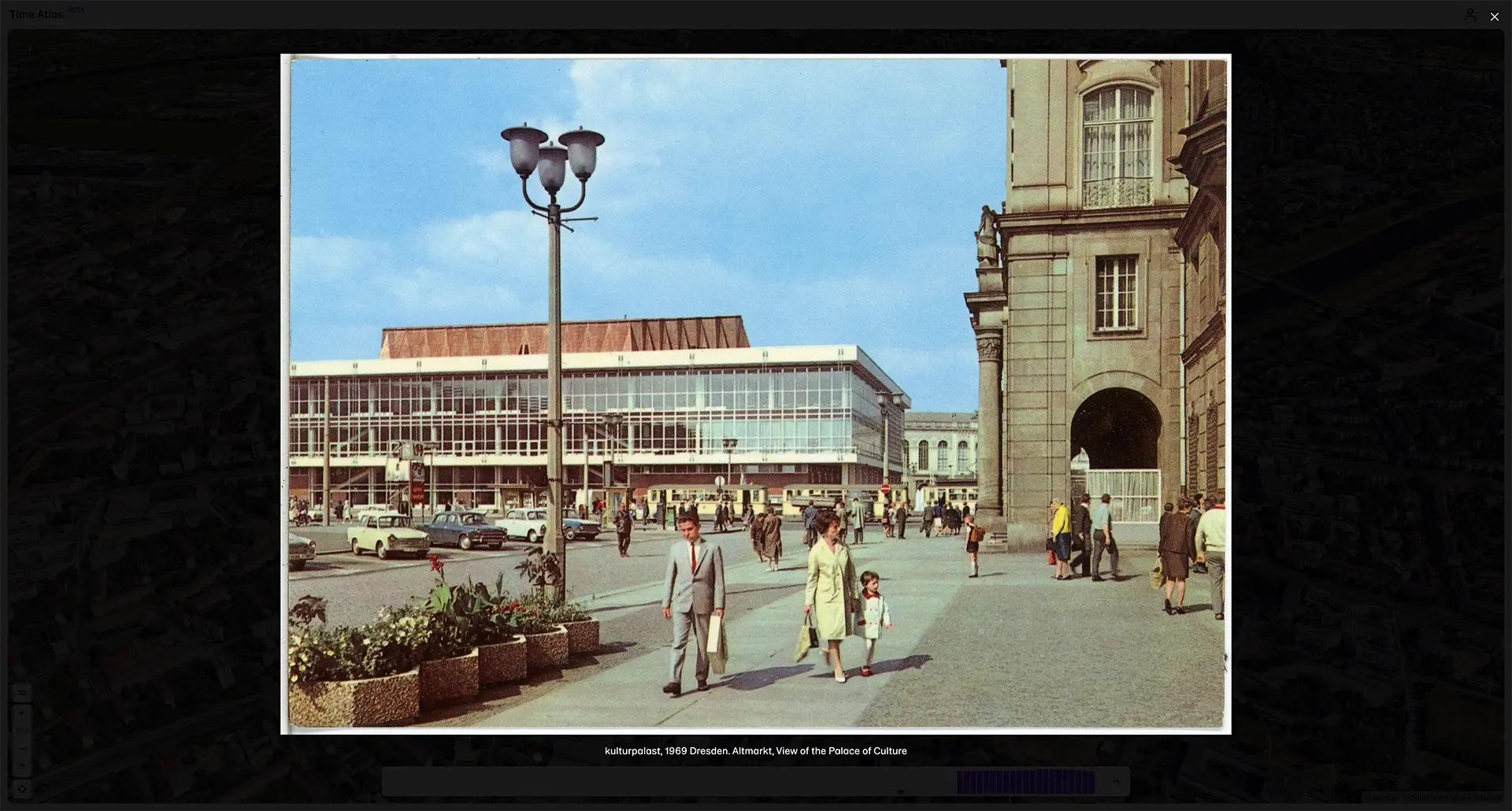
It is an interactive historical-geographical platform designed to integrate spatial and temporal dimensions within a unified interface that includes not only information about the present but also multiple layers representing the past and possible futures of every place in the world. Each point or line displayed in the Time Atlas corresponds either to information extracted from historical sources such as cadastral records, maps, photographs, paintings, films and other documents, to historical reconstructions created by scholars such as 3D models of buildings or entire cities at specific epochs, or to future projects related to a site such as architectural models of planned constructions. The idea is to gather all this information in one place, re-aligning in space and time the myriad of data available about the world's past and future, and to build shared methods for displaying asset and historical data produced in local, diverse, and heterogeneous contexts, making them searchable and citable.
Time Atlas numbers
Beneath its intuitive interface, the Time Atlas is powered by advanced indexing methods that combine human and machine expertise to reorganize, in a radically new way, the immense corpus of documents currently held by heritage institutions as well as by urban and territorial planning institutes. The extracted information is directly linked to its corresponding sources, enabling new dynamics of reuse and valorization of digital patrimony.
In addition to being directly relevant for scholars, tourists, and ordinary citizens who care about the past and future of the places where they live, the Time Atlas is also a unique resource for training spatially and temporally aware AI systems. with articulated information about space and time that can hardly be inferred from the collation of large corpora of random texts. These AI systems, in turn, will prove crucial for interacting with the Time Atlas, curating its content, and continuously densifying its layers of information.
The Time Atlas Origin
The Time Atlas originates from the vision of the Venice Time Machine, launched in 2012 by the École Polytechnique Fédérale de Lausanne (EPFL) to reconstruct the evolution of Venice over a thousand years through its archival records, historical documents, and other sources. This initiative inspired the broader Time Machine Organisation, which brings together researchers across Europe to build Local Time Machines and design a distributed infrastructure for exploring the “Big Data of the Past” of each territory, first in Europe, and now across the entire world.